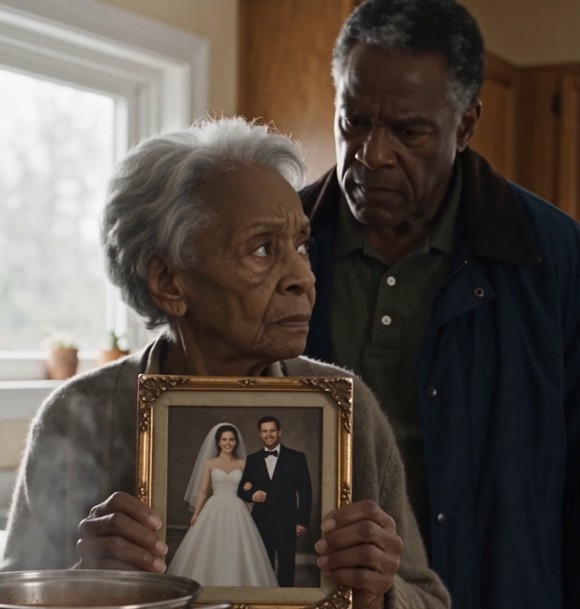
“You don’t get to disappear,” she said quietly.
Tommy lifted his head.
“You don’t get to kill yourself with guilt and call that accountability. You have to stay here and repair what you can.”
He nodded.
“You have to tell the truth to the bank.”
“Yes.”
“To the court.”
“Yes.”
“To me.”
“Yes.”
“And you have to get help.”
He looked ashamed. “I don’t know how.”
“Then learn.”
His mother folded the letter and placed it back in the envelope.
“That is the first honest thing you have said today,” she told him.
The legal process took months.
Tommy confessed to the fraud before the investigators found every piece of it. He turned over the false documents, gave them the names of the people who had helped him obtain them, and signed an agreement acknowledging that his mother was the sole owner of the property. The lender withdrew the foreclosure action after the fraudulent filings were exposed, though the debt remained.
He sold his business equipment, his car, and the small condominium he had purchased two years earlier. He moved into a rented room above a hardware store. He entered counseling and attended every court hearing. He did not ask his mother to speak on his behalf.
The woman who had helped create the false death certificate lost her license and faced charges. The physician whose identity had been stolen was cleared. The notary who had signed the forged documents surrendered her commission. Each consequence arrived without drama, but none could be reversed.
Tommy received probation, restitution orders, and community service. He spent Saturdays repairing houses for elderly residents who could not afford contractors. At first, he worked without speaking. Later, he began to listen.
His mother did not visit him there.
She had her own healing to do.
For several weeks, she slept in the guest room because the bedroom felt too full of memories. She removed the cracked glass from the wedding photograph but kept the frame. Her granddaughter came every Sunday and helped her sort through old boxes.
They found report cards, hospital badges, recipes written on envelopes, and photographs of Tommy at every age.
In one picture, he was six years old, missing both front teeth and holding a cardboard sign that read, My Mama Is the Strongest.
His granddaughter held it against her chest.
“He loved you,” she said.
“He did.”
“Does he still?”
“Love and harm can live in the same person.”
She looked at the photograph. “That is difficult to understand.”
“Most true things are.”
“Do you forgive him?”
The old woman placed a stack of letters into a box.
“I forgive the child who was afraid his father had left because he was unworthy.”
“And the man?”
“I am learning the difference between forgiving someone and trusting them.”
Her granddaughter nodded slowly.
“Do you trust me?” she asked.
The old woman smiled. “You came when you heard the truth.”
“I should have come before.”
“You believed what your father told you.”
“I believed you were far away.”
“You were lied to.”
“I still believed it.”
“You were lied to by someone you loved. That is not the same as choosing the lie.”
The young woman pressed her lips together. “I want to know everything.”
“You may ask.”
“What was my grandfather really like?”
The old woman looked toward the window.
“He was charming. He could make a room laugh. He could make you believe he understood your heart. He was also selfish, frightened, and very good at turning his shame into someone else’s fault.”
“Like Dad.”
“Your father learned from him.”
“Can he unlearn it?”
“He has begun.”
“Will you let him come back?”
“I have not asked him to leave forever.”
“That is not an answer.”
“No. It is not.”
In spring, Tommy came to the house for the first time under conditions his mother had written down.
