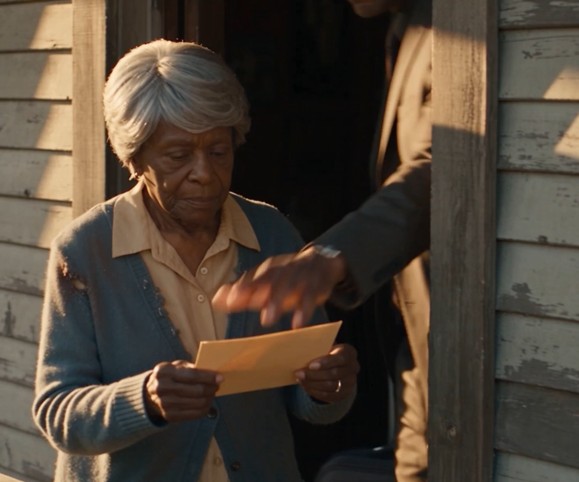
Ruth hated that part. She had expected truth to move quickly once spoken aloud. Instead, it traveled through bank records, interviews, signatures, postponed dates, and envelopes that made her stomach tighten when they arrived.
A document examiner confirmed the forged signature. The title company preserved Daniel’s messages. The buyers, a young couple who had never met Ruth, supplied his assurances that the owner had already moved into assisted living.
Their deposit had gone into an account Daniel controlled.
There had been no misunderstanding.
He had booked the vacation after receiving it.
Marlene provided records showing the savings withdrawals had paid his credit cards, a car loan, and travel expenses. She returned the money still sitting in their joint account. Then she filed for divorce.
Ruth did not mistake cooperation for innocence. Marlene had helped make the house unbearable long before she understood the fraud. But when the prosecutor asked whether Marlene had ever claimed Ruth was confused, Ruth answered carefully.
“She repeated him. I never heard her invent it.”
She would not improve the truth for anyone, including herself.
One afternoon, Ellen brought Daniel’s proposed arrangement. He would repay Ruth, he said, if she asked the prosecutor to let the matter end without a conviction.
“Can I even do that?” Ruth asked.
“The charging decision belongs to the state. You can express your wishes.”
Ruth studied the repayment schedule. It stretched across years he had already taught her not to trust.
“What happens if I don’t?”
“The case proceeds.”
That night she opened the drawer containing his school photographs. In one, he was missing a front tooth. In another, he wore the shirt she had stayed up ironing because he wanted to look important for picture day.
She sat until the window became a dark mirror.
In the morning she called Ellen.
“I want the case to proceed.”
Her voice broke afterward, when there was nobody left on the line to hear.
Daniel eventually pleaded guilty to the forgery and financial exploitation charges. The bank records, the false power of attorney, and his written instructions to the title company left him little room to argue.
At sentencing, Ruth stood with her statement folded into quarters.
“I still remember every age he has ever been,” she told the court. “That has made this hard. But I need the years I have left to belong to me.”
She did not ask for the harshest punishment. She asked for protection, restitution, and an end to his control over her life.
The judge imposed a prison sentence and restitution. An order prohibited Daniel from contacting her except through counsel. His authority over every account had already been revoked; his beneficiary designation was removed. The fraudulent sale was canceled, and the buyers recovered their deposit from the frozen funds.
His share of the marital assets and the sale of his car covered much of Ruth’s loss. A restitution judgment remained for the rest.
When an officer led him away, Daniel searched the benches for someone to stand.
No one did.
Outside the courthouse, Ruth stopped beneath a bare tree.
Claire waited beside her.
“I thought I’d feel lighter,” Ruth said.
“Do you?”
“No.”
Claire slipped her arm through Ruth’s only after Ruth offered it.
“Then we’ll carry today home.”
Spring arrived without asking whether Ruth was ready.
She began taking short walks with Mrs. Alvarez. She went back to the library. At the bank, a patient woman showed her how to set alerts on her own phone, then waited while Ruth did each step herself.
There were bad afternoons. A suitcase rolling past her at the pharmacy made her abandon her shopping. Once, Claire said she would handle a repair bill, and Ruth snapped so sharply that they both went quiet.
“I meant I’d drive it over,” Claire said.
Ruth stared at the unpaid envelope.
“I need people to say exactly what they mean.”
“All right.”
“And I’m sorry I shouted.”
“All right,” Claire said again, softer.
They learned each other again in those small corrections.
Marlene’s divorce became final that summer. She sent Ruth a brief letter acknowledging that she had chosen comfort over asking questions. There was no request for forgiveness.
Ruth answered with three sentences. She confirmed receiving the letter, wished her an honest life, and said she did not want further contact.
Then she went outside and watered her tomatoes.
Claire found a counselor. She told Ruth this over lunch as though confessing something shameful.
“I keep thinking loving him means I’m betraying you.”
Ruth set down her fork.
“He is your father.”
“I don’t want to excuse him.”
“You don’t have to. And you don’t have to stop loving him on my account.”
Claire looked down.
“What about you?”
Ruth took a long breath.
“I love someone I cannot let into my house.”
It was the truest thing she had said in months.
Near the end of summer, Ellen brought back the original documents from Ruth’s trust file. Tucked into the older purchase records was a yellow envelope Ruth had never seen.
