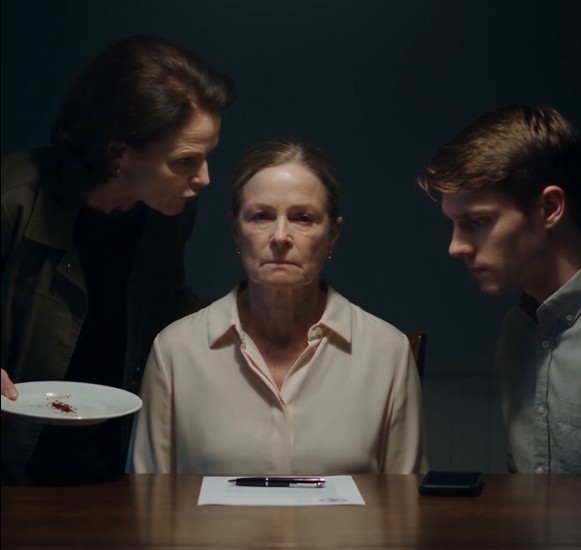
Meanwhile, Ruth developed a habit of arriving with enough soup to feed a small wedding. One afternoon, I caught her checking the back lock for the third time.
“You can sit down,” I told her.
She kept her hand on the bolt.
“I heard the plate,” she said.
I looked up.
“Before the chair. I thought you’d dropped something. I nearly stayed home.”
“You came.”
“Not straightaway.”
There it was again, the terrible arithmetic of minutes.
I took her hand off the lock.
“You crossed the garden. You opened your arms. That is what happened.”
She cried into a dish towel, annoyed with herself for doing it. Afterward we ate soup from mismatched bowls, and she stopped pretending she was only visiting because she had cooked too much.
When spring came, the bank invited me to collect the final confirmation that its investigation was closed and my accounts were secure. Arthur Bell met me in a plain office with a woman named Leah Mercer, the investigator who had first flagged the suspicious documents.
I thanked her.
She glanced at Arthur, then asked whether she might tell me something personal.
“You used to have a blue bedroom upstairs,” she said.
I stared at her.
“With yellow curtains. And a little wooden horse on the windowsill.”
The room seemed to move backward around me.
Years before, a woman named Ellen had come to my door with her daughter after leaving a violent husband. A mutual friend had asked whether they could stay one night. They had stayed six weeks.
The child had spoken so softly that I sometimes knelt to hear her.
“Lily?” I whispered.
“My middle name. Mum used it then.”
Leah smiled, but her eyes were wet.
“You let me keep that horse.”
I remembered placing it in her coat pocket on the morning they left. I remembered Ellen trying to pay me from a thin purse and my closing her fingers around it.
They had moved far away. We exchanged cards until addresses changed, and then life carried us beyond each other’s reach.
“I didn’t recognize your married surname in the file at first,” Leah said. “The application was flagged because the signatures and contact details didn’t match our records. When I saw the address, I knew.”
She had followed the required process, referred the discrepancies, and made sure verification came directly to me. The message that frightened me into asking questions had come because a little girl from my blue bedroom had grown into a woman who knew when something was wrong.
“Is your mother all right?”
“She is. She has a garden. An unreasonable number of cats.”
I laughed so suddenly that it hurt.
Leah reached into her bag and showed me a photograph. Ellen stood beneath an apple tree, older and sturdy, holding the wooden horse in her palm.
“She asked me to tell you she never forgot sleeping through the night in your house.”
For months, I had seen my home as the thing that made people want to hurt me. Now another memory opened inside it: a frightened child eating toast, a woman learning she could leave her shoes beside the bed instead of sleeping in them.
The house had already saved someone.
When I got home, I went upstairs and opened the blue bedroom’s curtains.
Sunlight spread across the floor.
Daniel came to see me after his release, at a meeting I arranged in a public garden. He arrived early and waited beside a bench without approaching until I nodded.
We spoke for forty minutes.
He had found work repairing equipment. He lived in a rented room. The marriage was legally over. He answered my questions without making his circumstances sound like a punishment I could lift.
Finally, he said, “Do you think you’ll ever trust me?”
“I don’t know.”
He looked down, then back at me.
“All right.”
“I love you,” I said. The words scraped on the way out. “That doesn’t give you access to my money. Or a key. Or permission to come over without asking.”
“I understand.”
This time, understanding would have to survive being inconvenient.
It did, slowly. Through brief calls, small payments, and visits that ended when I said I was tired. I began to recognize him again in moments he could not have staged: returning a cashier’s extra change, listening without interrupting, accepting a canceled lunch without asking what he had done wrong.
We did not recover the old relationship. We made a smaller, more honest one, with room for what had happened.
On the anniversary of the night in the dining room, I invited Ruth, Leah, and Ellen to lunch. Daniel came, too, with my permission, and carried chairs into the garden.
Ellen stood in the kitchen doorway for a long time.
“It smells the same,” she said.
“Burnt pastry?”
“Home.”
We ate beneath the pear tree. Nothing matched: the plates, the chairs, the voices overlapping in the warm air. Ruth argued cheerfully with Ellen about roses. Leah showed Daniel the tiny wooden horse, its paint worn almost entirely away.
I watched my son listen to what his childhood home had meant to someone else.
When the dishes were cleared, he asked whether I wanted help putting the chairs back.
“Leave mine,” I said. “I’m staying out.”
He kissed my cheek only after I turned it toward him.
