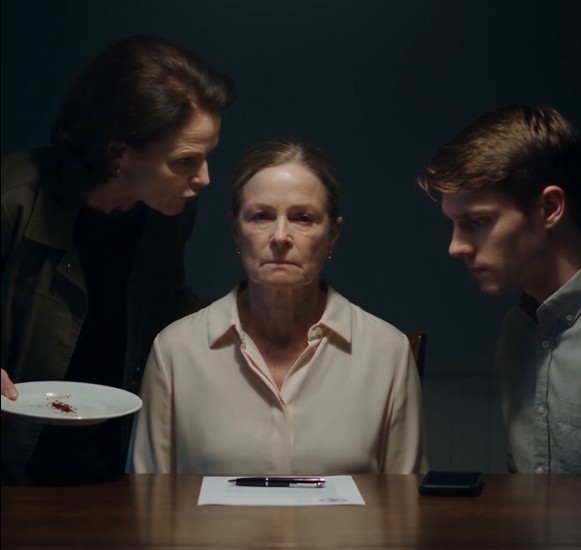
My attorney, Miriam Vale, arrived before the doctor finished stitching the wound.
She had advised me that afternoon to cancel dinner and meet Daniel somewhere public. I had told her my son would never allow things to get out of hand.
Neither of us mentioned that conversation.
“Your house is still yours,” she said, pulling a chair close. “Nothing they put in front of you tonight changed that.”
I asked her to say it again.
She did.
Three days earlier, an envelope addressed to Daniel had arrived at my house. He had been staying with Vanessa elsewhere, but some of his mail still came to me. The lender’s name matched one on a message I had received requesting confirmation of a loan application I had never made.
When I challenged him, he called it a clerical mistake.
Then I heard Vanessa on the porch telling him, “Your mother signs Friday, or they find out what you already sent.”
That was what had frightened me enough to call Miriam, make a police report, and contact Arthur Bell, the chairman of the community bank where I had kept my savings for thirty years.
The recorder had been Miriam’s suggestion, after she confirmed I could legally record a conversation I participated in. I had worn it hoping to capture an explanation. I had still set out three plates.
Miriam waited until the doctor left.
“There’s something else,” she said. “The bank’s investigators found a purported power of attorney.”
The fluorescent light hummed above us.
“It bears your signature.”
“I never signed one.”
“I know. They need the original records preserved, and they’ve suspended the pending transaction. But Daniel submitted it.”
I stared at the curtain around the bed. Its hem had come loose in one corner.
All evening I had been making a small, desperate distinction: Vanessa wanted my house; Daniel had been too weak to stop her.
Now even that was gone.
“Did he tell you?”
“He called my office after the police finished interviewing him. I told him he needed his own lawyer.”
My son had signed my name before he sat watching the place where I refused to write it.
I pulled the hospital blanket higher, although the room was warm.
The next morning, a detective asked whether I would provide bank records and a formal statement. He explained that my wishes mattered, but the charging decisions would not belong solely to me.
Still, I understood what cooperation meant. My voice, my documents, my testimony could help send my own child to prison.
Ruth sat beside my bed without touching me.
I thought of Daniel at seven, bringing me a fallen bird in both hands. Then I thought of the deed, and how carefully he had kept his eyes on it.
“Bring me the forms,” I said.
My hand shook as I signed my actual name.
I went home with Ruth that afternoon. She had offered her spare room, but I wanted to see my house in daylight. I needed to find out whether it still felt like mine.
The dining table was clean. Ruth had scrubbed it while her sister stayed at the hospital with me. A pale scratch crossed the wood where the plate had broken.
I put my palm over it.
“Don’t sand it yet,” I said.
“All right.”
The locksmith arrived before sunset.
Daniel called while the old lock lay dismantled on the hall floor. I let the call ring out. His message contained no request for forgiveness, only a request to tell me something before I heard it from anyone else.
Miriam arranged a meeting at her office five days later. Daniel came with his own attorney. I agreed to twenty minutes. Ruth waited in reception.
My son had shaved badly. There was a small cut beneath his jaw, and I hated myself for noticing it with a mother’s concern.
He laid a folder on the table.
“The signature was mine,” he said. “Vanessa showed me how to copy it. But I did it.”
Miriam kept her hands still beside her notebook.
“What happened to the money?”
Daniel swallowed.
“The first loan was against the business. We were behind. Then there was another one. Vanessa said we could put your house up, clear everything, and refinance before you knew.”
“You thought I wouldn’t notice a loan against my home?”
“I wanted to believe her.”
“That wasn’t my question.”
He bent his head.
“No. I thought you’d forgive me once it was done.”
The room became so quiet that I could hear someone rolling a suitcase along the pavement outside.
There it was: the thing he had counted on more confidently than money. My forgiveness. Something he had spent before asking whether I had any left.
“Why did you keep asking me to sign after she hurt me?”
His eyes filled.
“Because I thought if you signed, she’d stop.”
“You could have made her stop.”
“I know.”
“Before she touched me.”
“I know.”
I wanted him to argue. An excuse would have given me somewhere to put my anger. Instead he sat accepting every word, and I had to feel the whole weight of what he had done.
