“I’ll tell them exactly what happened.”
A man appeared behind Ruth, carrying a gray plastic tub.
Mara recognized him with a sick tightening beneath her ribs.
The waiter.
His face had thickened, and his hands trembled around the tub’s handles.
“Len,” Victor said. “Take her back to the grill.”
Len put the tub down.
“No.”
Victor stared at him.
Len wiped his palms against his trousers.
“I kept the closing sheets.”
Nobody moved.
“When the tips started coming up short, I took pictures. Then he began changing the hours after we clocked out.”
“You’re confused.”
“Three years of pictures.”
Victor reached for his phone.
Anika moved her folder away from his hand without touching him.
“You’re free to contact your lawyer.”
Len looked at Ruth.
“Those withdrawals weren’t yours. I watched him take envelopes out of the till. He said they were supplier payments.”
“You watched?” Ruth asked.
The question seemed to hurt him more than an accusation.
“I was afraid.”
Victor rose so quickly his chair struck the cabinet.
“You think she’ll save you?” he demanded, pointing at Mara. “She’s buying a story. She needs a poor old woman to put in a brochure.”
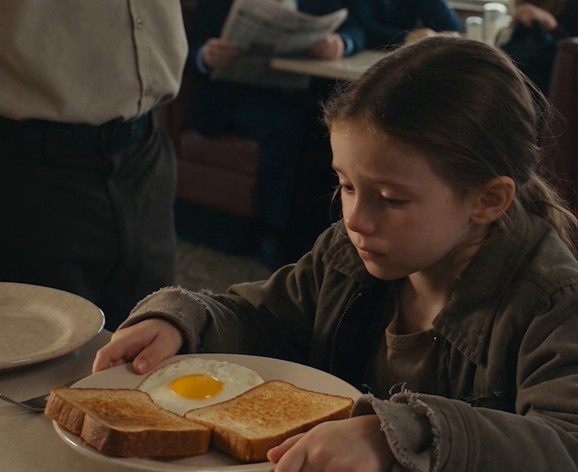
Mara felt the old room close around her: the table, the eyes looking away, the breakfast lifted out of reach.
Then Ruth stepped fully into the office.
“Get your finger out of her face.”
Her voice was quiet.
Victor’s hand dropped.
“She doesn’t owe me anything,” Ruth said. “And I don’t owe you my name.”
She untied her apron. It took two attempts because her fingers were stiff.
She laid it on his desk.
“Daniel died in February. You’re still charging me interest on his oxygen.”
For the first time, Victor had nothing ready to say.
They left through the dining room together.
Mara did not promise that everything would be simple. Outside, beside a parking meter, she explained what she could actually do: arrange independent counsel, help preserve records, and ask the cooperative board to release its emergency employment fund.
Ruth listened without lifting her eyes.
“Will they think I stole it?”
“They may ask difficult questions,” Anika said. “We’ll make sure you have someone beside you when they do.”
Mara touched Ruth’s sleeve.
“And you won’t have to go back inside to pay your rent.”
That was when Ruth began to shake.
Not gracefully. Not with a single tear.
Her knees buckled, and Len dragged a bus-stop bench cushion someone had abandoned away from the wet end of the seat. Mara sat beside her while she struggled to breathe.
“I signed it,” Ruth kept saying.
“You were frightened,” Mara answered.
“I’m still frightened.”
“I know.”
She stayed close enough that their shoulders touched, and did not ask Ruth to be brave.
The diner closed the following afternoon when the remaining staff refused to work without accurate wage statements. Victor taped a notice to the window blaming unforeseen circumstances.
The circumstances acquired names.
Six employees gave statements. Then four former employees came forward. Len supplied photographs with dates intact. Payroll records obtained through the investigation showed deductions that never reached any legitimate debt account.
Ruth’s supposed withdrawals appeared in cash summaries created while she was clocked out, and twice while she was hospitalized.
The supplier Victor had named was a company he controlled.
Nothing ended in a single dramatic afternoon.
There were interviews, amended claims, and nights when Ruth called her lawyer because she had remembered another detail and feared remembering it too late. There were weeks when Mara wanted to push every process faster than it could fairly go.
Instead, she helped the cooperative organize temporary kitchen work at a community center. The board approved bridge payments for displaced staff. An independent bookkeeper calculated the wages owed.
Ruth received her first payment while sitting at her own kitchen table.
She stared at the bank notification.
