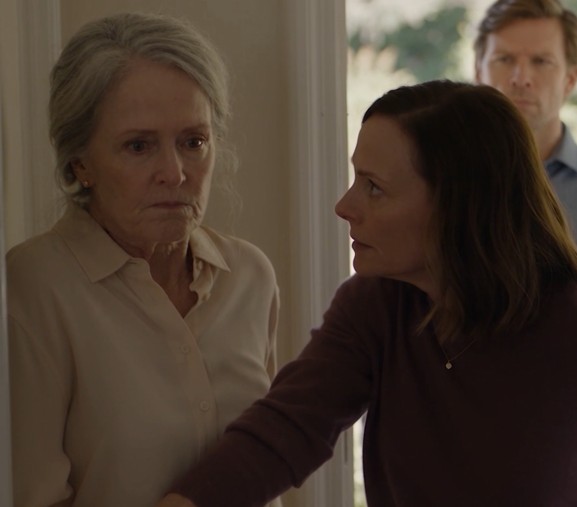
I looked at her.
“Of whom?”
“Of the version of Melissa you are still mourning.”
I lowered my fork.
“I do mourn her.”
“I know.”
“She was a wonderful child.”
“She still exists somewhere.”
“Maybe. But I cannot raise her again.”
“No,” Grace said. “You can only decide whether the adult she becomes is allowed to enter your life.”
Months passed.
The court accepted Todd’s guilty plea. He was ordered to repay the stolen money and serve time for the forgery. The gambling debts were his responsibility. The bank recovered enough to cover the remaining loss, and I closed every account he had accessed.
Melissa’s case took longer.
She entered counseling as part of a temporary agreement and began writing letters to Sophie that were reviewed by a family therapist. The first letters were full of apologies. The second blamed Todd. The third blamed fear. The fourth contained no explanation at all.
“I hurt Grandma,” she wrote. “I hurt you by making you believe a house could solve our lives. I am working to understand why I wanted control more than I wanted honesty.”
Sophie chose which letters to answer.
Sometimes she wrote, “I miss you.”
Sometimes she wrote, “I am still angry.”
Once, she wrote only, “Do not ask me to say it is okay.”
Melissa did not argue.
She answered, “It is not okay.”
The supervised visits began in a small room with soft chairs and a plastic plant in the corner. I did not attend the first one. Sophie asked Grace to sit nearby instead.
When I saw them through the observation window, Melissa was crying, but she kept her hands in her lap. Sophie sat across from her, stiff-backed and watchful.
Melissa did not reach for her.
That restraint mattered more than any apology.
Eventually, there were visits in the garden. Then at a café. Then, after nearly a year, at my house.
Melissa stood on the porch beneath the same light that had illuminated the locksmith’s tools.
She did not knock with the confidence of someone who belonged there.
She knocked once and waited.
I opened the door.
For a moment, we simply looked at each other.
Her hair was shorter. Her face had grown thinner. She carried no bag, no folder, no keys.
“May I come in?”
I stepped aside.
“Yes.”
She entered slowly.
Her gaze moved through the hallway. The walls were the same, but the furniture had changed. I had replaced the lock, not because I feared her now, but because I wanted the door to belong to me again.
Sophie came from the kitchen.
Melissa stopped.
They stood several feet apart.
Then Sophie crossed the space and hugged her.
Melissa’s arms closed around her, but she looked at me before holding on tightly.
I nodded.
She buried her face in Sophie’s hair.
The sound she made was not quite a sob. It was something deeper, the sound of a person discovering that forgiveness could be offered without erasing the damage.
I went into the kitchen and put water on for tea.
Grace had left an hour earlier, but she had placed a small box beside the kettle.
Inside were three keys.
The new house key.
The key to the cedar chest.
And an old brass key I had not seen in years.
I recognized it immediately.
It had belonged to my mother.
When I was young, she had kept it on a ribbon around her neck. I had assumed it opened the cedar chest. It did not. The chest had always used a different key.
I carried the brass key into the hallway.
“Grace left this,” I said.
Melissa looked at it.
“What is it?”
“I don’t know.”
Sophie took it from my palm and turned it over.
