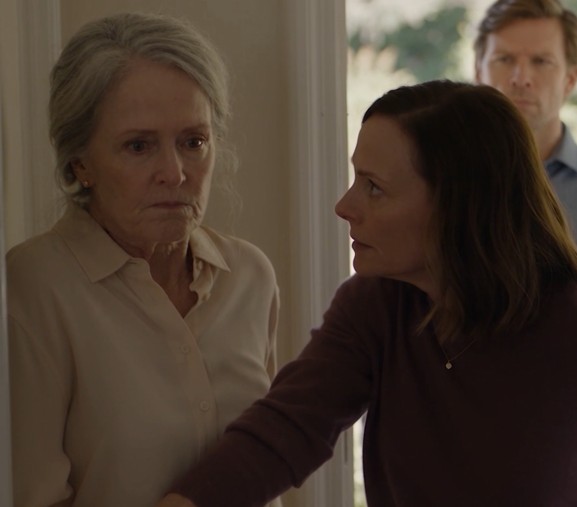
“I was angry.”
“I know.”
“I was also afraid.”
She swallowed.
“I was afraid that if I died, you would sell the house and Sophie would have nowhere that remembered her. I was afraid you would turn it into money before you understood what it meant.”
“I understand now.”
“Do you?”
She looked at the table.
“No,” she said. “Not fully. But I understand that it was never just a house.”
The attorney remained silent. Grace sat beside me, her hands resting on a closed folder.
I said, “You told people I was incapable of making decisions.”
“I know.”
“You made me doubt my memory.”
“I know.”
“You let Sophie believe I might be sent away.”
Her face collapsed.
“I know.”
The anger I had kept contained for weeks rose suddenly, hot and shaking.
“No, you do not know. You were not there when she asked me whether she should hide my keys. You were not there when I stood in the grocery store unable to remember whether I had paid for the food because you had told me I was losing track of things. You were not there when I called the bank and the woman on the phone said someone had already changed my contact information. I sat in my car for twenty minutes wondering whether I had done it myself.”
Melissa began to cry.
I did not stop.
“You made me a stranger in my own life.”
She pressed a hand over her mouth.
The attorney shifted in his chair, but I raised my hand. I needed the words to finish.
“Do not ask me to comfort you for what you did to me.”
“I’m not.”
“Then what are you asking for?”
“A chance to become someone who would never do it again.”
“That is not something you ask me for. That is something you prove.”
She nodded.
“I will.”
“You may not be allowed near me for a while.”
“I understand.”
“You may lose custody of Sophie.”
“I understand.”
“You may go to prison.”
Her breath caught.
“I understand.”
The truth of that answer finally reached me. She was not bargaining. She was not pointing to the sacrifices she had made or reminding me of the years she had cooked for me when I was recovering from surgery.
She was sitting inside the consequences without asking me to open the door.
“I cannot promise forgiveness,” I said.
“I know.”
“I cannot promise you the house.”
“I know.”
“And you cannot use Sophie to get to me.”
“I won’t.”
The meeting ended without an embrace.
At the door, Melissa stopped.
“Mom?”
I looked at her.
“I found something in the cedar chest.”
My heart tightened. “What?”
“A letter. It was under the baby blanket.”
“What letter?”
“I don’t know. I didn’t read it. I thought you should.”
She left before I could ask anything else.
Grace and I went home in silence.
The cedar chest stood at the foot of my bed. It had belonged to my mother, its surface worn smooth where generations of hands had lifted the lid.
I opened it.
Beneath Sophie’s white blanket was an envelope yellowed with age.
