She sat in darkness for nearly an hour.
Then she forwarded the recording to Ruth and blocked the number.
Seven months after the airport, Michael entered guilty pleas to fraud and forgery.
The evidence included his submission records, the false invoices, the original signature he had copied, and messages in which he had coached Vanessa to describe Carol as forgetful.
His lawyer asked for leniency.
Carol listened from the second row.
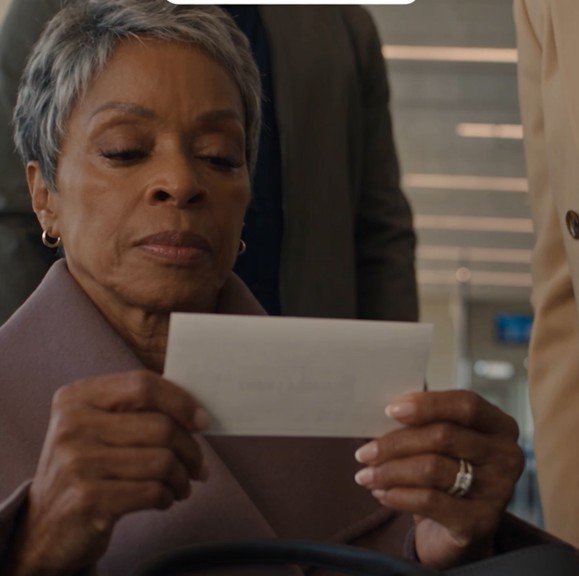
When invited to speak, she carried a single sheet of paper to the front. She had written a longer statement, then crossed out every sentence defending her decision to be there.
“I gave my son money because he said he needed help,” she read. “I would have survived losing money freely given. What I cannot repair for him is his decision to take away my right to choose.”
Michael stared at the table.
“I want restitution,” she continued. “I want my home protected. And I want the court to understand that being his mother does not mean I consented.”
The judge imposed a prison sentence, restitution, and restrictions against contacting Carol during supervision except through approved channels.
Assets were sold under the restitution process. The recovery would not replace every dollar, but with the fraudulent loan stopped, Carol could remain in her home without depending on her son.
His company closed. His marriage ended. The crimes became convictions no apology could erase.
As officers led him away, Michael looked back.
Carol did not wave.
Outside the courthouse, Vanessa stood beside a stone planter.
For a moment neither woman spoke. Traffic moved through wet streets. Somewhere nearby, a delivery driver was arguing about parking.
Carol had expected relief to feel larger.
Instead, she felt hungry, cold, and seventy-four.
“Have you eaten?” Vanessa asked.
“No.”
“There’s a café across the street.”
Carol considered her.
“We can have lunch. That isn’t the same as everything being all right.”
“I know.”
They sat beside a window that steamed at the edges.
Vanessa kept her coat on.
“I need to say something without asking you to make me feel better,” she said.
Carol put down her spoon.
“I believed him because believing him gave me someone to blame. I was frightened about money, and I liked thinking the problem was you. It made me feel less foolish.”
Carol watched a drop of water travel down the glass.
“He lied to you.”
“Yes. But he didn’t make me speak to you like that.”
The waitress set bread between them. Neither reached for it.
“At Christmas,” Carol said, “you told me the good towels were for guests.”
Vanessa closed her eyes.
“I remember.”
“I went upstairs and checked the towel I’d used. I thought perhaps I’d ruined something.”
“You hadn’t.”
“I know that now. I need you to understand what I was doing while you were angry with me.”
Vanessa cried silently, wiping her cheeks with the edge of a paper napkin.
Carol let the silence remain.
Then Vanessa asked, “Is there anything I can do?”
“Stop deciding what I need before you ask.”
“All right.”
“And take your coat off. You’re making me hot.”
A surprised breath escaped Vanessa, almost a laugh. She unbuttoned it with shaking fingers.
They did not become family again over soup.
For a while, they became two people who met on Thursdays.
Vanessa found a small apartment and steady work managing a dental office. She paid her lawyer, closed the last joint account, and learned to inspect every bill herself.
Carol joined a community pottery class. Her first bowl leaned so badly that the instructor suggested calling it a dish.
She brought it home anyway.
Some mornings she still reached for the phone to tell Michael something ordinary: the plum tree had blossomed early; the neighbor’s cat had returned; she had finally fixed the sticking drawer.
Those mornings were the hardest.
She began seeing a counselor who never told her to stop loving him.
“Love can stay,” the counselor said. “Access can change.”
Carol wrote that on a card and kept it beside the telephone.
A letter arrived from Michael during his first winter in prison. His apology named the documents he had forged and the money he had taken. It did not blame Vanessa or mention his father.
Carol read it twice.
She placed it in a drawer.
