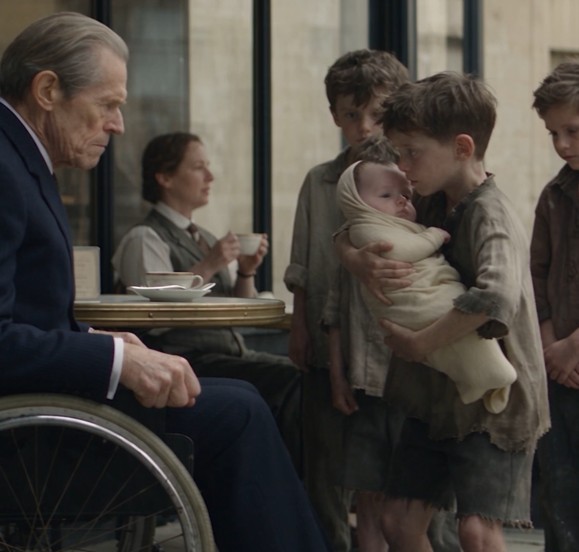
“You gave him access to children.”
The old man looked at the police lights spinning against the buildings.
“Yes.”
Jonah flinched as though he had wanted an excuse and hated him for not offering one.
“My parents died because of him.”
“I know.”
“You don’t know.”
The old man lowered his eyes.
Jonah stepped closer. “My mother was alive for three hours after they pushed her down those stairs. Three hours. She kept asking where Lina was. My father crawled across the floor trying to reach her. I was fourteen, and I had to choose which one to hold first.”
The old man’s face tightened.
Jonah continued, his voice breaking. “I held my mother. My father died alone.”
No one interrupted.
“I thought if I got Lina away, if I kept Mara and Eli alive, then maybe their deaths would mean something. Then your man found us again.”
The old man looked at Lina’s sleeping face.
“I will testify.”
“That doesn’t bring them back.”
“No.”
“You can’t pay for that.”
“No.”
“Then what good are you?”
The old man looked down at his legs.
For the first time, the answer came without calculation.
“I don’t know.”
Jonah’s anger faltered. The old man had expected denial, promises, an offer of money. He had not expected uncertainty.
“I don’t know what good I am,” the old man repeated. “But I know what I helped build. I know what I ignored. And I know I can tear it down.”
Jonah studied him.
“What does that mean?”
“It means every record, account, contract, and name connected to Mercy House will be opened. Every child will be found. Every person involved will be exposed.”
“And if your lawyers stop you?”
“I’ll dismiss them.”
“If the board fights?”
“I’ll dissolve the board.”
“If you lose everything?”
The old man looked toward the café, where the silver fork still lay beneath the table.
“Then I’ll lose everything.”
Jonah said nothing.
Eli limped forward. His face was pale.
“Will Lina heal him?”
The old man glanced at the baby.
“No,” he said gently. “Not today.”
Eli nodded, though disappointment passed over his face.
“Will she ever?”
“We’ll find doctors who help without hurting her.”
Dr. Soren, standing nearby, closed her medical case.
“I know one,” she said.
The old man turned to her.
“Do you?”
“My former mentor. She runs a pediatric rehabilitation center in the northern district. She has treated nerve injuries for twenty years. She won’t use Lina. She’ll protect her.”
Jonah looked at Dr. Soren with suspicion.
“Why should we trust you?”
“You shouldn’t,” Dr. Soren said. “Not yet.”
Her eyes moved to the police car, then back to him.
“But I can tell you where the records are hidden.”
The old man looked at her.
“Do it.”
Dr. Soren took out her phone.
The files began arriving before the ambulance left the curb.
There were hundreds of them.
Children with rare illnesses. Children listed as transferred, deceased, or discharged. Children whose families had been told they could not afford treatment. Experimental consent forms bearing signatures that did not match. Payment records from private pharmaceutical companies. Security footage. Internal messages.
The old man read until the words blurred.
