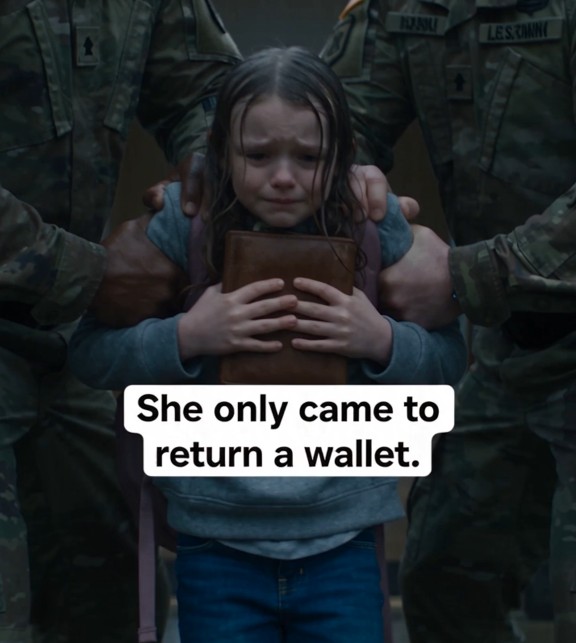
For the first time that night, some of the anger in them gave way to grief.
“I missed her,” Eliana said.
“I did too.”
The criminal case against Victor Sloane unfolded with the brutal clarity of daylight.
Investigators uncovered forged records, diverted trust funds, surveillance contracts, false debt instruments, and a network of private companies built to conceal the theft. He had used his access to manipulate the lives of officers and families whose vulnerabilities could be turned into influence. Eliana had not been his only victim, though she had been the one he watched most closely.
Sloane’s recorded confession, the ledgers, and testimony from the contractors left him nowhere to hide. He was stripped of rank, dismissed from service, convicted of kidnapping, fraud, extortion, conspiracy, and attempted murder.
When the sentence was read, he sat without expression as the judge described the damage he had caused. The prison doors closed behind him for the rest of his life.
General Nathaniel Graves resigned his command the morning after Sloane’s conviction.
The press called it a fall from power. Some accused him of abandoning his post. Others praised his testimony and the investigation he had forced open.
Graves gave no speech.
He signed the resignation, turned in his credentials, and walked out carrying only one small box from his office: Miriam’s photograph, Eliana’s old graduation picture, and Ruby’s drawing with the yellow sun.
Eliana did not forgive him quickly.
She accepted the trust after an attorney of her choosing examined every page. She moved with Ruby into a modest house with a narrow front porch, three bedrooms, and a small yard where dandelions grew through the fence line.
Graves did not buy the house for her.
He paid the legal restitution Sloane owed, added nothing without permission, and helped only when she asked. At first, she asked for very little.
He came on Tuesdays and Saturdays because Ruby wanted to see him. He arrived on time. He never entered without knocking. He learned that Ruby hated peas but loved strawberries, that she could read chapter books far above her grade level, that she was afraid of thunder but would deny it if anyone noticed.
One Saturday, he found her sitting on the porch steps with a shoebox in her lap.
“What have you got there?” he asked.
Ruby opened it.
Inside were photographs, a tiny knitted cap, hospital bracelets, and a faded greeting card with a pink balloon on the front.
“My mom kept all this,” Ruby said.
Graves sat beside her.
Ruby held up the card. “This says happy birthday to Eliana. Grandma Miriam wrote it.”
Graves took the card carefully.
Inside, Miriam had written: To my brave girl. I hope one day you understand that you were loved before you ever had to prove you deserved it.
Ruby looked at him. “Did Grandma know about me?”
Graves’s breath caught.
He turned the card over.
On the back, beneath Miriam’s handwriting, was a date.
It was written three months before Ruby was born.
Tucked inside the card was a photograph Graves had never seen. Eliana, visibly pregnant, stood outside a clinic with Miriam beside her. Miriam’s arm was around Eliana’s shoulders. Both were crying, but Eliana was smiling.
Graves could not speak.
Eliana stood in the doorway behind them.
He looked up at her.
“I found that in my old things,” she said. “Victor must have kept it from you.”
“You saw Mom?” Graves asked.
Eliana nodded. Her eyes shone. “She found me. Before she got sick. Victor had told her I did not want contact too. He lied to both of us.”
Graves looked at the photograph again.
Miriam had found Eliana.
Miriam had known about Ruby.
And in the final months of her life, while Graves had believed his wife was simply withdrawing into illness and grief, she had been trying to build a bridge he did not even know existed.
“There is a letter for you,” Eliana said.
She handed him a sealed envelope.
His name was written across the front in Miriam’s hand.
This letter was shorter.
Nathaniel,
Eliana is going to have a daughter. She is frightened, but she is stronger than either of us understands. I have asked her not to close the door forever. I have asked you to become the kind of man who deserves it opened.
Do not punish yourself by staying away. That is only another way of leaving.
Love, Miriam.
Graves lowered the letter.
Ruby was looking at him with solemn eyes.
“Grandma wanted you to find us,” she said.
He nodded, unable to trust his voice.
Eliana came down the porch steps and sat on the other side of Ruby. The three of them remained there in the soft afternoon light, a little girl between a father and daughter who had spent too long believing they were alone.
“I cannot promise it will be easy,” Eliana said.
“I would not believe you if you did,” Graves answered.
“I still get angry.”
“You should.”
“I may get angry for years.”
“I will still be here.”
