“I’ll drive you to a hotel.”
“We’re going home.”
“I’m taking you to a hotel,” he repeated. “Then I’m coming back for my things.”
Her face changed. For the first time, she seemed to understand that this was happening beyond the borders of an argument she could win.
At the door, she turned toward Ruth.
“You’ll regret destroying his marriage.”
Marcus stopped on the porch.
“She didn’t sign those papers.”
Brooke waited for him to say more. He carried the suitcase to the car.
When they were gone, Ruth sat in the chair he had pulled out.
Her knees knocked together once. She pressed both palms against them.
Daniel remained near the doorway.
“Would you like me to leave?”
“No,” she said, surprising herself. “But I don’t think I can talk.”
He sat on the other side of the kitchen, far enough away that she did not have to arrange her face for him.
The house emptied of voices. Waves sounded through an open window. Somewhere in the garage, the loose end of the folding cot tapped against its metal frame.
Ruth began to cry without covering her face.
Daniel stayed until her friend Evelyn arrived from the mainland. Evelyn brought sandwiches, a soft nightdress, and the particular steadiness of someone who had known Ruth before motherhood.
She found the cot in the garage.
“Do you want this removed?”
“Tomorrow.”
“All right.”
No argument. No insistence that clearing it away would fix anything.
That night, Ruth slept in the bedroom overlooking the water. At two in the morning she woke convinced she had forgotten to prepare breakfast for strangers.
Evelyn found her standing in front of the refrigerator.
“There’s nobody to feed,” she said.
Ruth rested her forehead against the cool door.
“I know.”
Evelyn stood beside her until knowing reached the rest of her body.
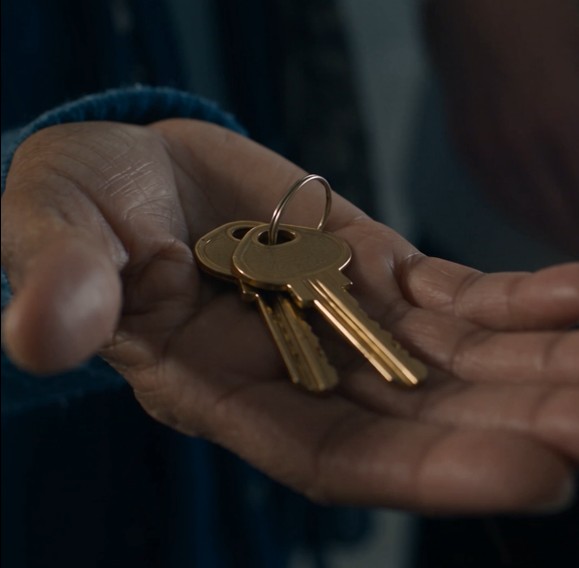
The locks were changed the next morning. Ruth kept the old brass keys in a kitchen drawer, unwilling to throw them away while they still felt like evidence of something she needed to remember.
Marcus returned at noon carrying the two chairs.
“Where do you want them?”
“On the porch.”
He put them there, then waited by the steps.
Ruth stayed inside the screen door.
“I used to hear your car and feel happy immediately,” she said. “Yesterday, I heard it and wondered what you needed.”
He looked down.
“I don’t know how to fix that.”
“Neither do I.”
He nodded, accepting the answer.
Then she asked him to remove the cot.
He carried it past her with its canvas folded inward. Seeing him struggle to fit it through the garage doorway brought back the narrow space Brooke had chosen for her body.
Ruth had to sit down.
Marcus left the cot outside and came no closer.
“I should have checked,” he said.
“You should have thought I deserved a bed before checking.”
His face crumpled.
“Yes.”
She let him cry without comforting him. It was harder than she had expected.
Over the following weeks, Ruth learned that telling the truth once did not spare her from having to tell it again. There were interviews, bank records, sworn statements, and mornings when an unfamiliar number on her phone made her stomach tighten.
Her attorney obtained cancellation of the unauthorized bookings. The house remained hers; Brooke had never had ownership to give away. The platform suspended Brooke’s account and supplied records in response to legal demands.
Six bookings became seven when investigators found another deposit.
Brooke’s messages showed that she had planned to keep Ruth in the garage during each visit. In one, she called the arrangement “included domestic support.”
Ruth read that line only once.
At her kitchen table, Marcus read it and pushed the papers away.
“I kept telling myself she sounded harsh because she was stressed.”
“Sometimes you laughed.”
He stared at her.
“At Christmas,” Ruth said. “When she said retirement had made me available for errands. You laughed.”
“I remember.”
